 Trustpilot



Quick Answer: What Is YAG Laser Capsulotomy?
YAG laser capsulotomy is a short, outpatient laser procedure used to treat posterior capsule opacification (PCO), a common cause of cloudy vision after cataract surgery. PCO develops when cells cause the thin membrane behind the artificial lens to become cloudy. A YAG laser creates a small opening in this membrane, allowing light to reach the retina more clearly. The procedure usually does not require an incision, although suitability and potential risks should be assessed by an eye specialist.
Introduction
Cataract surgery can significantly improve vision by replacing the eye’s cloudy natural lens with an artificial intraocular lens. However, some people notice that their vision becomes cloudy, blurred or less clear again months or years after surgery.
This change does not necessarily mean that the cataract has returned. In many cases, the cause is posterior capsule opacification (PCO), sometimes informally called a secondary cataract.
YAG laser capsulotomy is a commonly used treatment for PCO. It uses a specialised laser to create an opening in the cloudy membrane behind the artificial lens, helping light pass through the eye more clearly.
Understanding why PCO develops, how the procedure works and what recovery involves can help patients make informed decisions about their eye health.
Key Takeaways
- Cloudy vision after cataract surgery may be caused by posterior capsule opacification (PCO).
- PCO is not the same as the original cataract returning.
- YAG laser capsulotomy creates an opening in the cloudy capsule behind the artificial lens.
- The procedure is generally performed as an outpatient treatment without an incision.
- Temporary floaters or blurred vision may occur after treatment, and complications are possible.
- An eye examination is important to confirm the cause of reduced vision and determine whether laser treatment is appropriate.
- Sudden vision loss, new flashes, a sudden increase in floaters or a dark curtain across vision require urgent assessment.
1. What Is YAG Laser Capsulotomy?
YAG laser capsulotomy is an eye procedure that treats posterior capsule opacification, a condition that can affect vision after cataract surgery.
During cataract surgery, the cloudy natural lens is removed and replaced with an artificial intraocular lens (IOL). The thin, transparent capsule that originally surrounded the natural lens is usually preserved to support the artificial lens.
Over time, some remaining lens cells may grow or change on the back surface of this capsule. This can make the membrane cloudy and interfere with the passage of light through the eye.
A YAG laser delivers carefully focused pulses of energy to create a small opening in the affected capsule. This allows light to pass through more freely.
The procedure is generally carried out in an outpatient setting. It does not usually require a surgical incision or stitches.
Important: YAG laser capsulotomy is not required after every cataract operation. It is considered when PCO affects vision or causes other significant visual difficulties.
2. What Is Posterior Capsule Opacification?
Posterior capsule opacification, or PCO, is a condition in which the thin membrane behind an artificial lens becomes cloudy following cataract surgery.
It is one of the recognised long-term complications of cataract surgery. It can develop months or years after an otherwise successful operation.
Why does PCO develop?
During cataract surgery, the cloudy natural lens is removed while the supporting capsule is generally left in place. Small numbers of lens cells may remain after the procedure. These cells can multiply or change, causing cloudiness on the capsule.
PCO is not caused by a new cataract growing back. The original cloudy natural lens has already been removed. Instead, the cloudiness develops in the membrane behind the artificial lens.
Is PCO common?
PCO is a recognised complication after cataract surgery, but the likelihood and timing vary between individuals. Not everyone develops PCO, and not everyone who develops it needs laser treatment.
An ophthalmologist can assess whether the capsule is affecting vision and whether treatment is appropriate.
Internal link suggestion: Link the words “cataract surgery” to the website’s [Cataract Surgery page].
3. Symptoms of Cloudy Vision After Cataract Surgery
PCO can cause symptoms similar to those experienced before cataract surgery. The symptoms may develop gradually and become more noticeable during activities that require clear vision.
Common symptoms include:
- Blurred or cloudy vision: Objects may appear less clear than they did after cataract surgery.
- Glare: Bright lights may become uncomfortable or distracting.
- Difficulty with night driving: Headlights and streetlights may appear more troublesome.
- Reduced contrast: It may become harder to distinguish objects against backgrounds.
- Faded visual clarity: Vision may feel less sharp, even when glasses are being used.
- Difficulty with reading: Fine print and detailed tasks may become more challenging.
These symptoms are not exclusive to PCO. Other eye conditions, including problems affecting the retina, cornea or macula, can also cause reduced vision.
For this reason, a professional eye examination is important before deciding on treatment.
4. Who May Need YAG Laser Treatment?
YAG laser capsulotomy may be recommended when an ophthalmologist confirms that PCO is responsible for symptoms or is significantly affecting visual function.
Treatment may be considered when:
- Vision has become cloudy or blurred following cataract surgery.
- Glare interferes with daily activities.
- Night-time visibility has become more difficult.
- PCO affects reading, work or other everyday tasks.
- Examination confirms that capsule clouding is contributing to the visual problem.
The decision depends on the degree of cloudiness, its effect on the patient’s vision and whether another condition could explain the symptoms.
When might YAG laser capsulotomy not be appropriate?
If the capsule is clear, or another eye condition is responsible for the symptoms, YAG laser treatment may not improve vision. An ophthalmologist may need to investigate other possible causes before recommending a procedure.
Patients should also discuss their eye history, including any retinal conditions, previous eye surgery and other relevant risks.
Internal link suggestion: Link “artificial intraocular lens” to the website’s [Premium Intraocular Lens page], if available.
5. How Is YAG Laser Capsulotomy Performed?
YAG laser capsulotomy is usually a short outpatient procedure. The exact steps and aftercare instructions may vary according to the patient’s eye condition and the treating clinician’s protocol.
Step 1: Eye examination
The ophthalmologist reviews the patient’s symptoms and medical history and examines the eye. Vision may be measured, and the back of the eye may be assessed to check for other possible causes of reduced vision.
The clinician explains whether PCO is present, whether laser treatment is appropriate and what risks are relevant to the individual patient.
Step 2: Preparing the eye
Eye drops may be used to dilate the pupil. Additional drops may be given according to the clinician’s assessment and treatment protocol.
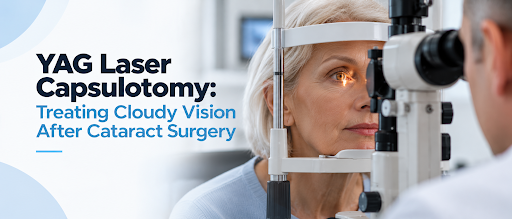
The patient sits at a specialised laser instrument, similar to the equipment used during certain eye examinations.
Step 3: Laser treatment
The ophthalmologist focuses the YAG laser on the cloudy posterior capsule. Carefully controlled laser pulses create a small opening in the membrane behind the artificial lens.
The laser works through the front of the eye, so an incision is not normally required.
Patients may see flashes of light during treatment. The clinician will explain how to position the head and where to look.
Step 4: Immediate checks
After the procedure, the clinical team may check eye pressure or perform other assessments where appropriate. The need for monitoring and any prescribed eye drops depend on the patient’s circumstances.
Step 5: Aftercare instructions
Before leaving, the patient should receive instructions about eye drops, activities, follow-up appointments and symptoms that need urgent medical attention.
Patients should ask when they can safely drive again. Vision may be temporarily blurred, and the effects of dilating drops can make driving unsafe.
6. Benefits and Possible Risks of YAG Laser Capsulotomy
When PCO is the main cause of reduced vision, YAG laser capsulotomy can improve visual clarity and reduce related symptoms. However, the degree of improvement depends on the overall health of the eye and whether other conditions are present.
Potential benefits
- Improved visual clarity: Removing the obstruction caused by PCO can allow light to pass through more clearly.
- Reduced glare: Some patients experience less glare when capsule clouding was contributing to the problem.
- Outpatient treatment: The procedure is generally performed without an overnight hospital stay.
- No surgical incision: The laser is used to create an opening in the capsule without conventional cutting.
- Usually a short procedure: The laser treatment itself typically takes only a short time, although preparation and observation can take longer.
No outcome can be guaranteed, and improvement may be limited if another eye condition is affecting vision.
Possible risks and complications
YAG laser capsulotomy is generally considered a safe procedure when appropriately indicated, but it is not risk-free.
Potential complications include:
- Temporary floaters: Small moving spots or shapes may be noticeable after treatment.
- Raised eye pressure: Pressure inside the eye can increase following the procedure.
- Inflammation: Some patients develop inflammation that may require treatment.
- Retinal tear or detachment: This is an uncommon but important complication, particularly in people with relevant risk factors.
- Macular oedema: Swelling in the central part of the retina may occur.
- Artificial lens effects: The laser can occasionally cause marks or damage to the intraocular lens.
- Persistent visual symptoms: Vision may not improve as expected if PCO is not the only cause of the problem.
The ophthalmologist should explain the risks that are most relevant to the individual patient, including any additional precautions required because of their eye history.
7. Recovery After YAG Laser Capsulotomy
Many patients return home shortly after treatment. Vision may take some time to settle, and recovery varies between individuals.
Immediately after treatment
Vision may be temporarily blurred because of dilating drops, the examination process or changes following the laser procedure. Some patients notice floaters.
Follow the clinic’s instructions regarding eye drops and any recommended checks. Do not drive until vision is sufficiently clear and you are no longer affected by dilating drops.
During the first few days
Some patients notice an improvement in vision relatively quickly. Others may need longer for symptoms to settle.
Use prescribed eye drops exactly as directed. Do not stop or change medication without advice from the treating clinician.
Ask the clinic when normal activities, exercise and driving can safely resume, as recommendations may depend on individual circumstances.
Follow-up appointments
The need and timing of follow-up depend on the patient’s eye pressure, symptoms, medical history and the clinician’s assessment.
Contact the treating clinic if symptoms are worsening or recovery is not progressing as expected.
Seek urgent medical attention for sudden vision loss, new flashes of light, a sudden increase in floaters, a dark curtain or shadow across the vision, or significant eye pain.
8. YAG Laser Capsulotomy: NHS and Private Treatment
In the UK, access to YAG laser capsulotomy may be through an NHS ophthalmology service or private eye care, depending on clinical need, local arrangements and eligibility.
NHS treatment
An NHS ophthalmology team can assess whether PCO is responsible for the symptoms and whether treatment is clinically indicated. Access and waiting times vary by location and service.
Patients who have undergone cataract surgery should follow the advice provided by their original surgical team or GP when seeking further assessment.
Private treatment
Private eye care may offer an alternative route for assessment and treatment. The consultation should establish the cause of the symptoms, confirm whether YAG laser capsulotomy is appropriate and explain the treatment plan.
Before proceeding, ask what the quoted fee includes. Charges may vary depending on the provider and whether the consultation, procedure, follow-up and any additional assessments are billed separately.
No fixed price is stated here because fees vary by provider and should be verified directly before publication.
Questions to ask before booking
- Is PCO definitely the cause of my symptoms?
- What benefits can reasonably be expected in my case?
- What are my individual risk factors?
- What does the quoted fee include?
- Will I need follow-up appointments?
- Who should I contact if I experience symptoms after treatment?
Internal link suggestion: Link “consultation” to the website’s [Contact / Consultation page].
9. How to Choose an Eye Specialist
Choosing an appropriate eye specialist is an important part of making an informed decision about treatment after cataract surgery.
Consider the following points:
- Relevant ophthalmology experience: Ask about the clinician’s experience assessing PCO and performing YAG laser capsulotomy.
- Clear explanations: The clinician should explain the diagnosis, treatment alternatives, potential benefits and risks in understandable language.
- Individual assessment: Treatment should be recommended following an examination rather than based on symptoms alone.
- Transparent costs: For private treatment, request a clear explanation of consultation, procedure and follow-up fees.
- Aftercare arrangements: Understand how follow-up is managed and whom to contact if symptoms develop.
- Professional credentials: Check relevant qualifications and registration through appropriate official sources.
Patients considering treatment with Mr Rajesh Deshmukh can use the clinic’s official website to review the available services and contact the practice to confirm appointment arrangements and suitability.
Only include claims about specific qualifications, memberships, hospitals or years of experience after confirming them against current official information.
10. When to Seek Urgent Medical Attention
Cloudy vision that develops gradually should be assessed by an eye care professional. However, certain symptoms can indicate a more urgent problem and should not be assumed to be caused by PCO.
Seek urgent eye assessment if you experience:
- Sudden loss or significant deterioration of vision.
- New flashes of light.
- A sudden increase in floaters.
- A dark curtain or shadow moving across your vision.
- Significant eye pain or marked redness, particularly after a procedure.
- Worsening vision accompanied by other new symptoms after YAG laser treatment.
These symptoms can be associated with conditions that require prompt assessment, including retinal problems or complications following treatment. Do not wait for a routine appointment if they occur. Seek urgent eye care through an appropriate local service; if you cannot access urgent eye care, contact NHS 111 for guidance.
11. Frequently Asked Questions
1. What is YAG laser capsulotomy used for?
YAG laser capsulotomy is used to treat posterior capsule opacification (PCO), a condition that can make vision cloudy after cataract surgery. The laser creates an opening in the cloudy membrane behind the artificial lens, allowing light to pass through more clearly.
2. Can cataracts return after cataract surgery?
The original cataract does not grow back because the cloudy natural lens has been removed. However, posterior capsule opacification can develop behind the artificial lens and cause similar symptoms. This is sometimes called a secondary cataract, although it is not the same as the original cataract.
3. Is YAG laser capsulotomy painful?
The procedure is generally well tolerated and does not usually require an incision. Patients may notice bright flashes of light or mild discomfort from the examination equipment. Individual experiences vary, so discuss any concerns with the treating ophthalmologist before treatment.
4. How long does YAG laser capsulotomy take?
The laser treatment itself usually takes only a short time. Preparation, pupil dilation, checks and any observation may make the overall appointment longer. The clinic can explain how much time to allow for an individual appointment.
5. How soon will vision improve after YAG laser treatment?
Some patients notice clearer vision relatively soon after treatment, while others take longer for their vision to settle. The result depends on the extent of PCO and whether other eye conditions are present. Follow the clinician’s advice and seek assessment if vision deteriorates.
6. Can PCO develop again after YAG laser capsulotomy?
Once the opening has been created, the treated central area generally remains open. Further assessment may be needed if cloudy vision returns, because other eye conditions or less common changes may be responsible. New symptoms should not automatically be attributed to PCO.
7. What are the risks of YAG laser capsulotomy?
Possible risks include temporary floaters, increased eye pressure, inflammation, macular oedema, retinal tear or detachment, and marks on the artificial lens. Serious complications are uncommon, but individual risk varies. The ophthalmologist should explain the risks relevant to your eye health before treatment.
8. Is YAG laser capsulotomy available on the NHS?
YAG laser capsulotomy may be available through NHS ophthalmology services when clinically indicated. Access and waiting times depend on local arrangements and individual circumstances. A clinician can assess whether PCO is affecting your vision and advise on the appropriate referral or treatment pathway.
Conclusion
Cloudy vision after cataract surgery can be concerning, but it does not necessarily mean that the original cataract has returned. Posterior capsule opacification is one possible cause, and YAG laser capsulotomy can help when this condition is responsible for visual symptoms.
An eye examination is essential to confirm the diagnosis, consider other possible causes and determine whether laser treatment is appropriate. Understanding the procedure, possible risks, recovery and follow-up requirements can help you make an informed decision about your care.
If you are experiencing cloudy vision after cataract surgery, contact an appropriately qualified eye care professional for an assessment.

