 Trustpilot



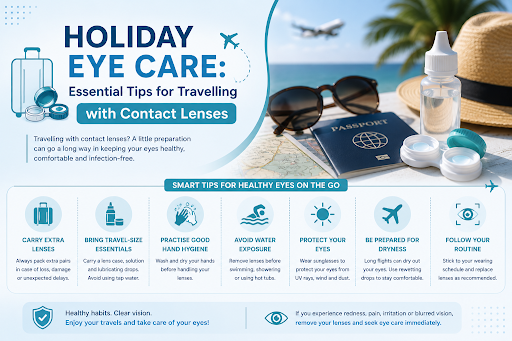
Whether you’re planning a relaxing beach holiday, a city break, or an adventurous overseas trip, travelling with contact lenses requires a little extra preparation. While contact lenses provide freedom from glasses and are convenient for travel, changes in climate, air travel, swimming, and hygiene can increase the risk of dry eyes, irritation, and serious eye infections.
Many travellers unknowingly develop eye problems by sleeping in contact lenses, swimming while wearing them, or failing to maintain proper lens hygiene. Fortunately, with a few simple precautions, you can enjoy your holiday while keeping your eyes healthy and comfortable.
This guide shares essential tips for travelling safely with contact lenses, including what to pack, how to care for your lenses on the go, and when to seek medical attention.
Why Contact Lens Care Is Especially Important When Travelling
Travelling exposes your eyes to unfamiliar environments and conditions that can affect both comfort and eye health.
Common travel-related factors include:
- Dry cabin air during flights
- Hot or humid climates
- Air conditioning
- Dust and pollution
- Swimming pools and seawater
- Limited access to clean water
- Long sightseeing days
- Changes in your daily routine
Without proper care, these factors can increase the risk of irritation, dry eyes, and infections.
Pack Everything You Need Before You Travel
Before leaving home, prepare a dedicated eye care kit.
Your travel kit should include:
- Sufficient contact lenses for your entire trip
- Extra lenses in case of damage or loss
- Contact lens solution (travel-sized where appropriate)
- A clean contact lens case
- Prescription glasses as a backup
- Artificial tears or lubricating eye drops
- Sunglasses with 100% UVA and UVB protection
- A copy of your contact lens prescription
Having spare supplies helps avoid unnecessary stress if your lenses are lost or damaged.
Never Travel Without Your Glasses
Even if you wear contact lenses every day, always pack your glasses.
You may need them if:
- Your eyes become irritated
- You develop an eye infection
- You lose a contact lens
- Your eyes become too dry to wear lenses comfortably
A backup pair of glasses is one of the most important travel essentials.
Practice Excellent Hand Hygiene
Clean hands are essential for safe contact lens use.
Always:
- Wash your hands thoroughly with soap and water.
- Dry them with a clean, lint-free towel before handling your lenses.
Avoid touching your lenses after using hand sanitiser unless your hands are completely dry, as residue may irritate your eyes.
Keep Your Contact Lenses Clean
If you wear reusable lenses:
- Clean them exactly as instructed by your eye care professional.
- Use fresh disinfecting solution every time.
- Never reuse old solution.
- Replace your lens case every three months or sooner if it becomes damaged.
Never rinse your lenses or storage case with tap water.
Avoid Sleeping in Contact Lenses
Travelling often involves overnight flights, long train journeys, or unexpected naps.
Unless your lenses are specifically approved for overnight wear, remove them before sleeping.
Sleeping in contact lenses significantly increases the risk of corneal infections and ulcers.
Be Careful When Flying
Aircraft cabins have very low humidity, which can cause contact lenses to dry out.
To improve comfort during flights:
- Use preservative-free lubricating eye drops if recommended.
- Blink frequently.
- Stay hydrated by drinking water.
- Avoid directing air vents towards your face.
- Wear glasses instead of lenses on long-haul flights if possible.
Never Swim While Wearing Contact Lenses
Swimming while wearing contact lenses is one of the biggest risk factors for serious eye infections.
Water from:
may contain bacteria, parasites, or other microorganisms that can become trapped beneath your lenses.
This increases the risk of conditions such as:
- Microbial keratitis
- Corneal ulcers
- Acanthamoeba keratitis
If you plan to swim:
- Remove your contact lenses beforehand whenever possible.
- Wear prescription swimming goggles if you need vision correction.
- If you must wear lenses, use daily disposable lenses with well-fitting waterproof goggles and discard the lenses immediately after swimming.
Protect Your Eyes from the Sun
Ultraviolet (UV) rays can damage your eyes over time.
Although some contact lenses include UV filters, they do not protect the entire eye.
Wear high-quality sunglasses that provide:
- 100% UVA protection
- 100% UVB protection
- Wraparound coverage where possible
A wide-brimmed hat provides additional protection.
Stay Hydrated
Dehydration can contribute to dry eyes, particularly in hot climates.
To keep your eyes comfortable:
- Drink plenty of water throughout the day.
- Limit excessive alcohol and caffeine intake.
- Use lubricating eye drops if needed.
Consider Daily Disposable Contact Lenses
If appropriate for your prescription, daily disposable lenses are often the most convenient choice for holidays.
Benefits include:
- No cleaning required
- Reduced infection risk
- Fresh sterile lenses every day
- Easier packing
- No need to carry large bottles of lens solution
Discuss this option with your optometrist or ophthalmologist before travelling.
Watch for Signs of an Eye Infection
Seek medical attention promptly if you experience:
- Persistent redness
- Severe eye pain
- Blurred vision
- Increased light sensitivity
- Thick yellow or green discharge
- Excessive tearing
- A white spot on the cornea
Remove your contact lenses immediately if these symptoms occur.
Do not wear them again until advised by an eye care professional.
What to Do if You Lose a Contact Lens While Travelling
If you lose or damage a lens:
- Switch to your spare lenses.
- Wear your backup glasses if necessary.
- Avoid wearing an old or damaged lens.
- Purchase replacement lenses from a reputable provider if required.
Always carry your prescription details when travelling internationally.
Holiday Eye Care Checklist
Before you leave:
Pack enough contact lenses
Bring spare glasses
Carry travel-sized contact lens solution
Pack lubricating eye drops
Bring a clean lens case
Pack UV-protective sunglasses
Carry your prescription
Avoid swimming in contact lenses
Wash your hands before handling lenses
Replace lenses according to schedule
Frequently Asked Questions
Can I sleep in contact lenses while travelling?
Only if your lenses are specifically designed and prescribed for overnight wear. Otherwise, always remove them before sleeping.
Is it safe to wear contact lenses on a plane?
Yes, but cabin air can make your eyes feel dry. Lubricating eye drops, staying hydrated, and taking breaks from lens wear can improve comfort.
Can I swim with contact lenses?
It is not recommended. Swimming with contact lenses increases the risk of serious eye infections, including Acanthamoeba keratitis.
What should I do if my eye becomes red while travelling?
Remove your contact lenses immediately. If redness, pain, blurred vision, or discharge persists, seek urgent assessment from an eye care professional.
Tips for Healthy Eyes During Your Holiday
To keep your eyes healthy while travelling:
- Follow good contact lens hygiene.
- Never expose lenses to tap water.
- Wear sunglasses outdoors.
- Stay hydrated.
- Use lubricating eye drops when needed.
- Carry spare lenses and glasses.
- Remove your lenses before swimming and sleeping.
- Arrange an eye examination if symptoms develop.
Conclusion
Travelling with contact lenses can be safe and convenient when you plan ahead and follow good eye care practices. Simple steps such as packing enough supplies, maintaining excellent hygiene, avoiding swimming and sleeping in contact lenses, and protecting your eyes from the sun can significantly reduce the risk of irritation and infection.
If you experience redness, pain, blurred vision, or increased sensitivity to light while travelling, remove your contact lenses immediately and seek professional eye care. Looking after your eyes during your holiday will help ensure you return home with great memories and healthy vision.

