 Trustpilot



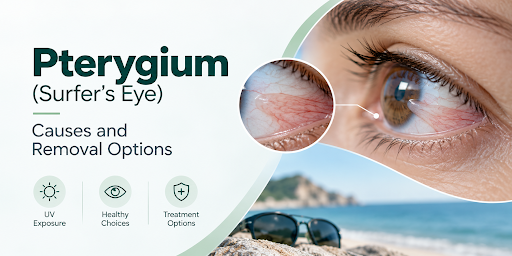
Have you noticed a small, raised, pink or white growth appearing on the white part of your eye? It could be a pterygium, commonly known as surfer’s eye.
A pterygium is a wedge-shaped growth of tissue that develops on the conjunctiva, the clear membrane covering the white part of the eye. It can gradually extend towards the cornea—the transparent front surface of the eye.
Pterygium is usually benign and does not become cancerous. However, a larger growth can cause persistent irritation, redness, dryness, blurred vision, or changes to the shape of the cornea.
Understanding the causes, symptoms, treatment options, and appropriate timing for removal can help protect your long-term eye health.
What Is a Pterygium?
A pterygium is a non-cancerous growth of conjunctival tissue that extends towards the cornea.
It commonly develops on the side of the eye closest to the nose, although it can occur elsewhere.
A pterygium may initially look like:
- A small raised area on the white of the eye
- A pink or reddish growth
- A triangular or wedge-shaped patch
- A visible tissue growth extending towards the coloured part of the eye
Small pterygia may remain stable for years, while others gradually grow towards the centre of the cornea.
Why Is It Called “Surfer’s Eye”?
The nickname surfer’s eye comes from the fact that people who spend significant amounts of time outdoors—particularly surfers—may have increased exposure to environmental factors associated with pterygium.
These include:
- Ultraviolet (UV) radiation
- Wind
- Dust
- Sand
- Dry conditions
- Irritating environmental particles
However, you do not need to be a surfer to develop pterygium. Anyone with significant outdoor exposure can be affected.
What Causes Pterygium?
The exact mechanism behind pterygium is not completely understood, but long-term exposure to ultraviolet radiation is considered an important risk factor.
UV Exposure
Repeated exposure to sunlight can damage the conjunctival tissue and contribute to abnormal tissue growth.
People who work or spend considerable time outdoors may therefore have a higher risk.
Wind and Dust
Regular exposure to wind, dust, sand, and other environmental irritants may contribute to chronic inflammation of the eye’s surface.
Dry Eye
Persistent dryness and irritation can make the ocular surface more vulnerable to inflammation and discomfort.
Where You Live
Pterygium is more common in regions with high levels of sunlight and UV exposure.
This is sometimes referred to as the “pterygium belt”, a geographical region close to the equator where UV exposure is particularly high.
Pterygium Symptoms
A small pterygium may not cause any symptoms.
As it becomes larger, however, you may experience:
- Eye redness
- Dryness
- Burning or irritation
- Gritty sensation
- Watery eyes
- Itching
- Foreign-body sensation
- Blurred vision
- Cosmetic concerns
Some people describe the sensation as having something constantly stuck in their eye.
Can Pterygium Affect Vision?
Yes.
A small pterygium may have little or no effect on vision. However, a larger growth can extend onto the cornea and alter its normally smooth curvature.
This may cause:
- Astigmatism
- Blurred vision
- Distorted vision
- Reduced visual clarity
If the pterygium grows towards the centre of the cornea, it can interfere more significantly with vision.
Pterygium vs Pinguecula: What’s the Difference?
Pterygium and pinguecula are sometimes confused because both are associated with environmental exposure.
| Feature | Pterygium | Pinguecula |
| Appearance | Wedge-shaped tissue growth | Small raised yellowish/white patch |
| Location | Can extend onto cornea | Usually remains on conjunctiva |
| Can affect vision? | Yes, particularly if large | Rarely |
| May require surgery? | Sometimes | Rarely |
| Associated with UV exposure | Yes | Yes |
A comprehensive eye examination can distinguish between the two.
How Is Pterygium Diagnosed?
An ophthalmologist can usually diagnose pterygium during a routine eye examination.
Assessment may include:
Slit-Lamp Examination
A slit lamp provides a magnified view of the:
- Conjunctiva
- Cornea
- Eyelids
- Tear film
- Other structures at the front of the eye
Corneal Measurements
If the pterygium is affecting the cornea, your ophthalmologist may assess corneal curvature and astigmatism.
Corneal Topography
A corneal map may be useful when the growth has altered the corneal surface or if surgery is being considered.
Does Every Pterygium Need Removal?
No.
Many small pterygia do not require surgery.
If the growth is stable and does not interfere with vision or cause significant symptoms, your ophthalmologist may recommend observation and protective measures.
Treatment decisions depend on factors such as:
- Size of the pterygium
- Rate of growth
- Symptoms
- Effect on vision
- Corneal involvement
- Cosmetic concerns
- Response to non-surgical treatment
Non-Surgical Treatment for Pterygium
Treatment is generally aimed at controlling symptoms rather than removing the existing growth.
Artificial Tears
Lubricating eye drops can help relieve:
- Dryness
- Burning
- Irritation
- Grittiness
Anti-Inflammatory Treatment
If the eye becomes significantly inflamed, an ophthalmologist may prescribe medication to reduce inflammation.
These medications should only be used under professional supervision.
UV Protection
One of the most important preventive measures is reducing further UV exposure.
Consider:
- Wearing sunglasses that provide UV protection
- Using a wide-brimmed hat outdoors
- Wearing appropriate eye protection in dusty or windy environments
When Is Pterygium Surgery Recommended?
Surgical removal may be considered when the pterygium:
Causes Significant Irritation
Persistent redness, dryness, or discomfort that does not respond adequately to conservative treatment may be a reason to consider surgery.
Affects Vision
If the growth induces significant astigmatism or approaches the visual axis, removal may help improve visual function.
Continues to Grow
A progressively enlarging pterygium may require treatment before it causes more significant corneal involvement.
Interferes With Contact Lens Wear
A larger growth can make contact lens use uncomfortable or difficult.
Causes Significant Cosmetic Concern
In some circumstances, patients may choose removal because of the appearance of the growth.
The decision should be made following a detailed examination with an ophthalmologist.
How Is Pterygium Removal Performed?
Pterygium surgery is usually performed as a day-case procedure using local anaesthetic.
The surgeon carefully removes the abnormal tissue from the surface of the eye.
One commonly used approach involves covering the area with a small conjunctival autograft taken from another area of the patient’s own conjunctiva.
The graft helps cover the exposed area and can reduce the likelihood of the pterygium returning compared with simple excision alone.
What Happens After Pterygium Surgery?
Recovery varies between patients.
You may experience:
- Redness
- Watering
- Mild discomfort
- Light sensitivity
- Temporary blurred vision
Your ophthalmologist may prescribe eye drops during the healing period.
The eye can remain red for several weeks while the surface heals.
It is important to attend follow-up appointments so your surgeon can monitor healing and check for recurrence.
Can Pterygium Come Back After Surgery?
Yes.
Pterygium recurrence is possible, which is why surgical technique and postoperative care are important.
Recurrence risk can vary depending on factors such as:
- Surgical technique
- Individual healing response
- Age
- UV exposure
- Size and characteristics of the original pterygium
Continuing to protect your eyes from UV exposure after surgery is an important part of long-term eye care.
How Can You Prevent Pterygium?
You cannot eliminate the risk completely, but protecting your eyes from UV radiation and environmental irritation may help reduce your risk.
Wear UV-Protective Sunglasses
Choose sunglasses that provide 100% UVA and UVB protection.
Wear a Hat
A wide-brimmed hat can provide additional protection from sunlight.
Protect Your Eyes Outdoors
If you work in dusty or windy environments, appropriate protective eyewear can help reduce irritation.
Manage Dry Eyes
Regular lubrication may help improve comfort if you experience dry eye symptoms.
When Should You See an Eye Doctor?
Arrange an eye examination if you notice:
- A new growth on the white of your eye
- Persistent eye redness
- Increasing irritation
- Changes in vision
- Increasing astigmatism
- A growth approaching the coloured part of your eye
- Persistent discomfort despite lubricating drops
A new or changing growth should be assessed rather than assumed to be a pterygium, as other eye conditions can appear similar.
Frequently Asked Questions
Is pterygium dangerous?
Pterygium is generally benign. However, a large or progressive growth can affect the cornea and cause visual problems.
Can pterygium go away on its own?
Established pterygium generally does not disappear on its own. Lubricating drops may relieve symptoms, but they do not remove the growth.
Does pterygium cause blindness?
Pterygium rarely causes severe vision loss. However, a very advanced growth can interfere significantly with the cornea and vision, which is why monitoring and appropriate treatment are important.
Is pterygium surgery painful?
The procedure is performed using anaesthesia, so significant pain during surgery is not expected. Some discomfort, redness, and irritation may occur during recovery.
Can I prevent pterygium from getting worse?
Reducing UV exposure and protecting your eyes from wind, dust, and other irritants may help reduce further ocular surface damage. Regular eye examinations can also monitor progression.
Conclusion
Pterygium, or surfer’s eye, is a common non-cancerous growth of conjunctival tissue that can extend onto the cornea. Long-term UV exposure, wind, dust, and environmental irritation are important risk factors.
Small, stable pterygia may only require observation, UV protection, and treatment for associated dryness or irritation. However, surgical removal may be considered when the growth causes persistent symptoms, affects vision, continues to enlarge, or creates significant discomfort.
If you notice a new growth on your eye or experience persistent redness, irritation, or blurred vision, an ophthalmic examination can determine the cause and whether treatment is necessary.
About US
Mr Rajesh Deshmukh is a consultant ophthalmologist with over 15 years of experience providing comprehensive eye care in London. He specializes in cataract surgery, refractive errors, and preventive eye health. His practice emphasizes evidence-based care and patient education to help individuals maintain optimal vision throughout their lives.
Book Your Eye Examination
Experiencing eye strain, headaches, or difficulty reading? These symptoms may indicate an underlying vision problem that’s easily correctable with proper glasses or treatment.
Schedule a comprehensive eye examination to ensure your eyes are healthy and your prescription is current. We offer thorough assessments, personalized recommendations, and the latest treatment options.
📞 Contact us today or visit rajeshdeshmukh.co.uk to book your appointment.

