 Trustpilot



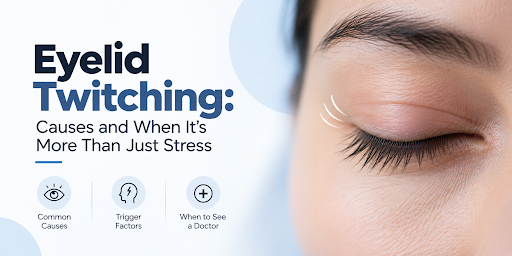
An eyelid that suddenly starts twitching can be distracting and frustrating. You may notice a small, repetitive movement in the upper or lower eyelid that comes and goes throughout the day.
In most cases, eyelid twitching is temporary and harmless. Stress, tiredness, excessive caffeine, eye strain, and irritation of the eye’s surface are common triggers.
However, persistent or unusual eyelid movements can occasionally be associated with conditions that require medical assessment. Understanding the difference between a typical eyelid twitch and symptoms that warrant an eye examination can help you know when to seek professional advice.
This guide explains the common causes of eyelid twitching, how it can be managed, and when you should see an ophthalmologist.
What Is Eyelid Twitching?
Eyelid twitching is an involuntary movement of the muscles around the eyelid.
The medical term commonly used for a minor eyelid twitch is eyokymia or myokymia.
It may feel like:
- A small fluttering sensation
- Repeated movement of the eyelid
- Pulsing beneath the skin
- A twitch that occurs intermittently
- Movement that becomes more noticeable when you’re tired
It most commonly affects one eye at a time and often settles without treatment.
What Causes Eyelid Twitching?
Several everyday factors can trigger or worsen eyelid twitching.
1. Stress
Stress is one of the most common factors associated with eyelid twitching.
Periods of emotional or physical stress can increase muscle tension and make involuntary muscle movements more noticeable.
The twitch may disappear once the underlying stress improves.
2. Lack of Sleep
Not getting enough sleep can make eyelid twitching more likely.
Fatigue may affect the muscles and nerves around the eye, causing intermittent spasms.
Improving your sleep routine may help the twitch settle.
3. Too Much Caffeine
Large amounts of caffeine may contribute to muscle twitching in some people.
Caffeine is found in:
- Coffee
- Tea
- Energy drinks
- Cola
- Some pre-workout products
If you notice that twitching becomes more frequent after consuming caffeine, reducing your intake may help.
4. Digital Eye Strain
Long periods of computer, tablet, or smartphone use can contribute to eye fatigue.
Screen-related eye strain may be accompanied by:
- Dry eyes
- Burning
- Blurred vision
- Headaches
- Difficulty focusing
- Eyelid twitching
Taking regular breaks and following the 20-20-20 rule can help reduce digital eye strain.
5. Dry Eyes
Dry eye disease can irritate the surface of the eye and contribute to eyelid twitching.
You may also experience:
- Burning
- Grittiness
- Redness
- Watery eyes
- Fluctuating vision
Artificial tears may help relieve symptoms when dry eye is contributing to the problem.
6. Eye Irritation
Environmental factors can irritate the eyes, including:
- Dust
- Smoke
- Wind
- Air conditioning
- Allergens
Contact lens wear can also contribute to irritation if lenses are not being used appropriately.
7. Eye Strain or an Uncorrected Prescription
If your glasses prescription is outdated or you have an uncorrected refractive error, your eyes may work harder to focus.
This can contribute to eye fatigue and headaches and may sometimes coincide with eyelid twitching.
A comprehensive eye examination can determine whether your prescription needs updating.
Is Eyelid Twitching a Sign of Stress?
Often, yes.
Stress, fatigue, and caffeine are among the most common triggers for temporary eyelid twitching.
However, it is important not to automatically assume that persistent twitching is caused by stress.
If the twitch continues for an extended period, repeatedly returns, or is accompanied by other symptoms, an eye examination can help identify the cause.
Different Types of Eyelid Spasms
Not every involuntary eyelid movement is the same.
Eyelid Myokymia
This is the common, fine twitching that affects part of an eyelid.
It is generally temporary and harmless.
Blepharospasm
Benign essential blepharospasm causes involuntary contractions of the muscles around both eyes.
Unlike a simple occasional twitch, the eyelids may close involuntarily and repeatedly.
It can interfere with activities such as reading, walking, or driving.
Treatment may include specialist management, including botulinum toxin injections in appropriate cases.
Hemifacial Spasm
A hemifacial spasm involves involuntary contractions affecting one side of the face, often beginning around the eye and potentially spreading to other facial muscles.
This is different from a typical eyelid twitch and should be evaluated by a medical professional.
When Is Eyelid Twitching More Than Just Stress?
Most eyelid twitching does not indicate a serious problem. However, you should arrange an eye or medical assessment if:
- The twitch persists or keeps returning.
- Your eyelid closes completely during the spasm.
- Twitching affects other parts of your face.
- Your eyelid becomes swollen or painful.
- Your eye becomes persistently red.
- You develop changes in vision.
- You have significant light sensitivity.
- Your eyelid droops.
- There is discharge from the eye.
- The symptoms interfere with everyday activities.
These symptoms do not necessarily mean you have a serious condition, but they deserve appropriate assessment.
Eyelid Twitching and Other Eye Conditions
Occasionally, irritation or inflammation around the eye may contribute to eyelid spasms.
Potential underlying problems include:
Blepharitis
Inflammation of the eyelid margins can cause:
- Itching
- Redness
- Crusting
- Burning
- Irritation
Dry Eye Disease
Insufficient or poor-quality tears can irritate the eye’s surface and cause discomfort.
Allergic Eye Disease
Allergies can cause itching and irritation, sometimes leading to frequent rubbing and eyelid spasms.
A proper diagnosis is important because treatment depends on the underlying condition.
How Is Persistent Eyelid Twitching Diagnosed?
An ophthalmologist will usually begin with a detailed history and eye examination.
They may assess:
- Eyelids and eyelid movement
- Eye surface
- Tear film
- Cornea
- Vision
- Eye muscles
- Nerve function
If the pattern of involuntary movement suggests a neurological condition rather than a simple eyelid twitch, additional medical assessment may be recommended.
How to Stop an Eyelid Twitch
For a typical temporary eyelid twitch, simple lifestyle changes may help.
Get Enough Sleep
Aim for a consistent sleep routine and give your eyes adequate rest.
Manage Stress
Relaxation techniques, regular physical activity, and taking breaks during demanding periods may help reduce stress-related twitching.
Reduce Excessive Caffeine
If caffeine appears to trigger your twitching, consider reducing your intake.
Take Screen Breaks
When using a computer or phone for long periods, follow the 20-20-20 rule:
Every 20 minutes, look at something approximately 20 feet (6 metres) away for at least 20 seconds.
Remember to blink regularly as well.
Manage Dry Eyes
If dry eye is contributing to your symptoms, an ophthalmologist or optometrist may recommend lubricating eye drops or other treatments.
Avoid Rubbing Your Eyes
Rubbing can increase irritation and may worsen symptoms.
If your eyes feel itchy or uncomfortable, seek advice about the underlying cause instead.
Can Eyelid Twitching Be Prevented?
It is not always possible to prevent eyelid twitching, but reducing common triggers may lower the likelihood of recurrent episodes.
Helpful habits include:
- Getting adequate sleep
- Managing stress
- Taking regular screen breaks
- Staying hydrated
- Avoiding excessive caffeine
- Treating dry eyes
- Managing allergies
- Having regular eye examinations
When Should You See an Ophthalmologist?
A routine eye examination is appropriate if twitching:
- Continues for a prolonged period
- Frequently returns
- Is becoming more noticeable
- Occurs with eye pain or redness
- Is associated with blurred or changing vision
- Interferes with daily activities
Seek prompt medical assessment if involuntary movements extend beyond the eyelid or occur alongside significant neurological symptoms.
Frequently Asked Questions
Why is my eye twitching all day?
Common triggers include fatigue, stress, caffeine, dry eyes, and eye irritation. If the twitch persists or repeatedly returns, an eye examination can help identify the cause.
Is eyelid twitching a sign of a vitamin deficiency?
Although nutritional deficiencies can cause various muscle or nerve symptoms, a simple eyelid twitch is more commonly associated with factors such as fatigue, stress, caffeine, or eye irritation. Do not start supplements solely because of an eyelid twitch without medical advice.
Can too much screen time cause eye twitching?
Prolonged screen use can contribute to eye strain and dry eyes, which may coincide with eyelid twitching. Regular breaks and frequent blinking can help.
How long does an eyelid twitch normally last?
A minor eyelid twitch may last for minutes, hours, or occasionally several days before settling. Persistent or recurrent twitching should be assessed by a healthcare professional.
Should I worry if my eyelid twitching spreads to my face?
Yes, it is worth getting assessed. Movement involving other facial muscles is different from a typical isolated eyelid twitch and may require further evaluation.
Conclusion
Eyelid twitching is usually temporary and harmless, with common triggers including stress, fatigue, caffeine, digital eye strain, dry eyes, and irritation.
However, persistent twitching should not always be dismissed as stress. If the eyelid repeatedly closes, the movement spreads to other parts of the face, or you develop pain, redness, swelling, vision changes, or other concerning symptoms, professional assessment is appropriate.
For occasional twitching, prioritising sleep, managing stress, reducing excessive caffeine, taking regular screen breaks, and addressing dry eye symptoms may help. If symptoms persist or interfere with your daily life, a comprehensive eye examination can determine whether an underlying eye condition is contributing to the problem.
About US
Mr Rajesh Deshmukh is a consultant ophthalmologist with over 15 years of experience providing comprehensive eye care in London. He specializes in cataract surgery, refractive errors, and preventive eye health. His practice emphasizes evidence-based care and patient education to help individuals maintain optimal vision throughout their lives.
Book Your Eye Examination
Experiencing eye strain, headaches, or difficulty reading? These symptoms may indicate an underlying vision problem that’s easily correctable with proper glasses or treatment.
Schedule a comprehensive eye examination to ensure your eyes are healthy and your prescription is current. We offer thorough assessments, personalized recommendations, and the latest treatment options.
📞 Contact us today or visit rajeshdeshmukh.co.uk to book your appointment.

