 Trustpilot



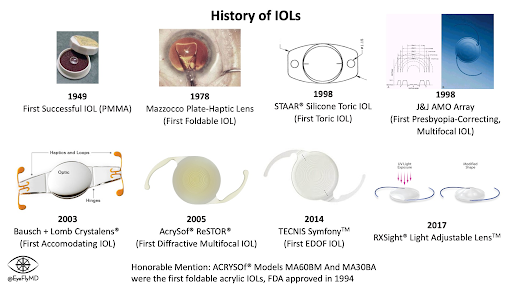
Choosing the right intraocular lens (IOL) for your cataract surgery is one of the most important decisions you’ll make during your eye care journey. This single choice will significantly impact your vision quality, your need for glasses or contact lenses after surgery, and your overall satisfaction with the procedure. With so many lens options available—monofocal, multifocal, toric, and premium designs—it can feel overwhelming. In this comprehensive guide, we’ll break down every type of cataract lens, help you understand the differences, and give you the tools to make an informed decision with your ophthalmologist.
What Is an Intraocular Lens (IOL)? Understanding the Basics
An intraocular lens is an artificial lens implanted in your eye during cataract surgery to replace your clouded natural lens. During the procedure, your surgeon removes the cataract-affected lens and replaces it with an IOL—a clear, permanent lens that stays in your eye for life. This IOL becomes an integral part of your eye’s focusing system, so selecting the right one is crucial.
IOLs are designed to focus light directly onto the retina, allowing you to see clearly. However, not all lenses focus light the same way. Some lenses correct distance vision only, while others provide multiple focal points for clear vision at various distances. Modern IOLs are made from biocompatible materials such as acrylic or silicone and are designed to last a lifetime without replacement.
Insurance companies typically cover the cost of basic monofocal IOLs—the standard lens option. However, if you choose a premium lens with additional features, you’ll likely pay out-of-pocket for the difference between your insurance coverage.
Types of Cataract Surgery Lenses: A Complete Comparison
Understanding the different IOL types will help you and your eye surgeon determine which lens aligns best with your lifestyle, budget, and vision goals. Let’s explore each option in detail.
Monofocal Lenses
Pollutants can irritate the conjunctiva, leading to:
- Redness
- Burning sensation
- Itching
- Watering eyes
This is one of the most common effects of polluted air.
Multifocal Intraocular Lenses
What They Do: These advanced lenses have multiple focal zones, allowing clear vision at distance, intermediate, and near ranges simultaneously. Your brain learns to use the appropriate zone depending on where you’re focusing.
Best For: Active individuals wanting freedom from glasses for most daily activities; people willing to invest in premium vision quality.
Pros:
- Near total glasses independence for most activities
- Good vision at all distances (far, intermediate, near)
- Improved quality of life and convenience
- Excellent for computer work and reading
Cons:
- Increase in glare and halos (especially at night)
- Reduced contrast sensitivity in low-light conditions
- Longer adaptation period (weeks to months)
- Higher cost and not covered by insurance
Toric Lenses (for Astigmatism)
What They Do: Toric IOLs are specially designed to correct astigmatism—an irregularly shaped cornea that causes blurred vision at all distances. These lenses have different powers in different meridians to address this refractive error.
Best For: Patients with astigmatism who want crisp, clear vision and fewer post-operative glasses needs.
Pros:
- Corrects astigmatism during cataract surgery
- Reduces need for corrective lenses post-surgery
- Sharper, clearer vision compared to monofocal in astigmatic eyes
- Available in both monofocal and multifocal designs
Cons:
- Must be precisely aligned (axis) during surgery—slight misalignment reduces effectiveness
- If combined with multifocal: same glare/halo concerns
- Higher cost than monofocal
Accommodating Lenses
What They Do: These innovative lenses move within the eye in response to focusing muscles, mimicking the natural accommodation of a young eye. This allows for a more continuous range of vision.
Best For: Patients wanting a more natural focusing ability without the halos associated with multifocal designs.
Pros:
- Better intermediate vision than monofocal
- Fewer halos and glare than multifocal lenses
- More natural accommodation mechanism
Cons:
- Still may need reading glasses for fine print
- Variable results; effectiveness depends on eye anatomy
- Fewer long-term safety studies compared to older lens types
Extended Depth of Focus (EDOF) Lenses
What They Do: EDOF lenses use advanced optical technology to extend the range of clear focus, providing improved intermediate vision while minimizing the halos and glare issues associated with multifocal designs.
Best For: Computer users, professionals, and those who want reduced glasses dependence without significant nighttime vision issues.
Pros:
- Excellent intermediate vision (computer and dashboard work)
- Fewer halos than multifocal designs
- Good contrast sensitivity in low light
- Improved overall vision quality compared to standard monofocal
Cons:
- Not as much reading independence as multifocal
- Higher cost than monofocal
Key Factors to Consider When Choosing Your IOL
Your Lifestyle and Daily Activities
Are you an avid reader, computer worker, or outdoor enthusiast? Your daily activities should heavily influence your lens choice. If you spend hours reading fine print or working on a computer, a multifocal or EDOF lens might be worth the investment. If you rarely read without glasses, a monofocal lens is perfectly suitable.
Your Occupation
Professionals who drive frequently (taxi drivers, pilots) or work in low-light environments might not be ideal candidates for multifocal lenses due to glare concerns. Meanwhile, computer programmers or architects might greatly benefit from EDOF lenses. Discuss your work requirements with your ophthalmologist.
Budget and Insurance Coverage
Be honest about what you can afford. While premium lenses offer advantages, you’ll experience significantly improved vision with any modern IOL compared to your cataract-clouded eye. If budget is tight, start with monofocal and use affordable reading glasses as needed.
Your Vision History
If you’ve had LASIK, PRK, or corneal refractive surgery previously, this affects IOL selection. Your surgeon must account for your post-refractive eye measurements. Patients with previous refractive surgery may benefit from special IOL formulas designed for their unique anatomy.
Your Other Eye
If you have two different lenses (one eye monofocal, one multifocal), your brain can adapt. However, consistency between eyes often provides better visual balance. Discuss bilateral strategy—treating both eyes the same versus using different lenses—with your surgeon.
Night Driving and Light Sensitivity
Are you sensitive to glare? Do you frequently drive at night? Multifocal lenses can cause some patients to experience halos around headlights. If you’re highly sensitive to light or drive frequently at night, consider monofocal or EDOF lenses instead.
Frequently Asked Questions About Choosing Your Cataract Lens
Q: Can my IOL be replaced if I'm not happy with it?
A: Yes, IOL exchange is possible but involves another surgery, anesthesia, and recovery. It’s uncommon and usually only done if there’s a medical problem. This is why choosing wisely the first time is important. Discuss any concerns thoroughly with your surgeon before the initial procedure.
Q: Will I still need glasses after cataract surgery?
A: With a monofocal lens, you’ll likely need reading glasses for close work. Multifocal and EDOF lenses reduce this need but don’t eliminate it for everyone—some patients still use glasses occasionally. Your specific results depend on your eye anatomy and the precise lens power selected.
Q: How long does it take to adapt to multifocal lenses?
A: Most patients adapt within 2-4 weeks, though some take up to 3 months. Your brain learns to use different zones of the lens automatically. If you’re uncertain, some surgeons suggest trying the first eye, waiting a month, and then deciding on the second eye based on your experience.
Q: Are premium IOLs worth the cost?
A: This depends on your lifestyle and priorities. If glasses independence is important and you can afford the additional cost, premium lenses provide excellent value. Many patients report that improved quality of life justifies the investment. However, modern monofocal lenses also provide excellent vision—the choice is personal.
Q: What's the difference between bilateral surgery and monovision?
A: Bilateral surgery means implanting the same lens type in both eyes. Monovision means optimizing one eye for distance and one for near (one eye gets distance power, the other gets near power). Discuss which approach your surgeon recommends for your situation.
Making Your Final Decision: Next Steps
Choosing the right IOL for your cataract surgery is a deeply personal decision that should balance your lifestyle, budget, and vision goals. Here’s your action plan:
- Schedule a comprehensive pre-operative exam with your eye surgeon
- Discuss your daily activities, lifestyle, and vision priorities honestly
- Ask about your surgeon’s experience with each lens type
- Inquire about upgrade or exchange policies
- Discuss financing options if considering premium lenses
- Ask to speak with patients who have had different lens types
- Make your decision confidently, knowing you’ve considered all options
Cataract surgery is one of the most successful and safe procedures in modern medicine. By taking time to select the right IOL for your unique situation, you’re setting yourself up for the best possible visual outcome and long-term satisfaction.

