 Trustpilot



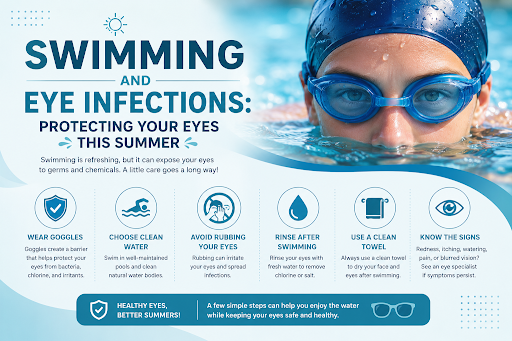
Summer is the perfect time to enjoy swimming pools, beaches, lakes, and water parks. While swimming is an excellent way to stay active and cool, it can also expose your eyes to bacteria, viruses, parasites, chlorine, and other irritants that may increase the risk of eye infections and inflammation.
Many people experience red, itchy, or watery eyes after swimming and assume chlorine is always to blame. However, harmful microorganisms and poor water hygiene are often the real causes of swimming-related eye problems.
This guide explains how swimming affects eye health, common eye infections linked to swimming, prevention strategies, and when it’s important to seek medical care.
How Swimming Can Affect Your Eyes
Your eyes are naturally protected by a thin layer of tears that keeps the surface lubricated and helps remove bacteria and debris. When you swim, this protective tear film can be disrupted by chlorine, saltwater, chemicals, or contaminated water.
Exposure to these substances may lead to:
- Eye irritation
- Dry eyes
- Redness
- Blurred vision
- Eye infections
- Corneal damage in severe cases
The risk is even higher if you swim while wearing contact lenses or if the water is poorly maintained.
Common Eye Infections Linked to Swimming
1. Conjunctivitis (Pink Eye)
Conjunctivitis is one of the most common eye infections associated with swimming.
Swimming pools that are not properly disinfected may contain bacteria or viruses that infect the conjunctiva—the thin membrane covering the white part of the eye.
Symptoms
- Red eyes
- Watery eyes
- Itching
- Swollen eyelids
- Sticky discharge
- Mild sensitivity to light
Treatment depends on whether the infection is viral, bacterial, or allergic.
2. Acanthamoeba Keratitis
Although rare, Acanthamoeba keratitis is one of the most serious swimming-related eye infections.
It occurs when microscopic amoebae found in freshwater, lakes, hot tubs, or poorly maintained pools infect the cornea.
People who swim while wearing contact lenses are at the greatest risk.
Symptoms
- Severe eye pain
- Redness
- Blurred vision
- Excessive tearing
- Light sensitivity
- Feeling that something is in the eye
Without prompt treatment, this infection can cause permanent vision loss.
3. Corneal Infection (Microbial Keratitis)
Bacteria, fungi, or parasites can infect the cornea after exposure to contaminated water.
Risk factors include:
- Contact lens wear
- Corneal scratches
- Poor contact lens hygiene
Symptoms
- Severe pain
- Red eye
- White spot on the cornea
- Blurred vision
- Sensitivity to light
This condition requires urgent ophthalmic treatment.
4. Swimmer's Eye (Chemical Irritation)
Many people believe chlorine causes red eyes. In reality, the problem often results from chloramines, chemicals formed when chlorine reacts with sweat, urine, sunscreen, and other contaminants.
Symptoms
- Mild redness
- Burning
- Dryness
- Watery eyes
- Temporary blurred vision
These symptoms usually improve within a few hours after swimming.
Can Contact Lenses Increase the Risk
Yes. Swimming while wearing contact lenses significantly increases the risk of serious eye infections.
Water can trap harmful microorganisms between the lens and the cornea, allowing bacteria or parasites to multiply.
Potential complications include:
- Corneal ulcers
- Acanthamoeba keratitis
- Microbial keratitis
- Corneal scarring
If you wear contact lenses, remove them before swimming whenever possible.
If swimming without lenses isn’t practical, wear daily disposable lenses with well-fitting waterproof swimming goggles, and discard the lenses immediately after swimming.
Swimming Pools vs Natural Water
Different swimming environments carry different risks.
Swimming Pools
Potential concerns include:
- Poor chlorine balance
- Bacteria
- Viruses
- Chloramines
Well-maintained pools are generally safer but do not eliminate all risks.
Lakes and Rivers
Natural water may contain:
- Parasites
- Bacteria
- Algae
- Fungi
Freshwater environments pose a higher risk for certain infections, particularly Acanthamoeba.
Sea Water
Saltwater usually contains fewer harmful microorganisms than freshwater but may still expose eyes to:
- Sand
- Salt
- Marine bacteria
- UV exposure
Protective eyewear remains beneficial.
Symptoms of a Swimming-Related Eye Infection
Seek medical advice if you develop:
- Persistent redness
- Eye pain
- Blurred vision
- Yellow or green discharge
- Light sensitivity
- Swelling
- White spot on the eye
- Excessive tearing
Symptoms lasting longer than 24–48 hours should not be ignored.
How to Protect Your Eyes While Swimming
Wear Swimming Goggles
Properly fitted goggles create a barrier between your eyes and the water.
Benefits include:
- Reduced exposure to bacteria
- Less chemical irritation
- Protection from debris
- Improved comfort
Avoid Swimming with Contact Lenses
Whenever possible:
- Remove contact lenses before entering the water.
- Wear prescription swimming goggles if needed.
Rinse Your Eyes After Swimming
After leaving the pool or beach:
- Rinse your eyes with clean, fresh water or sterile saline.
- This helps remove chlorine, salt, and microorganisms.
Practice Good Contact Lens Hygiene
If you wear contact lenses:
- Wash your hands before handling lenses.
- Never rinse lenses with tap water.
- Replace lens cases regularly.
- Follow replacement schedules carefully.
Choose Well-Maintained Swimming Facilities
Pools with proper water treatment reduce the risk of infection.
Avoid swimming if the water appears cloudy or poorly maintained.
When Should You See an Eye Doctor?
Arrange an urgent eye examination if you experience:
- Severe eye pain
- Sudden blurred vision
- Persistent redness
- Thick discharge
- Increasing light sensitivity
- Symptoms after swimming with contact lenses
Prompt treatment can prevent long-term complications.
Treatment for Swimming-Related Eye Infections
Treatment depends on the underlying cause.
Mild Irritation
May improve with:
- Lubricating eye drops
- Cold compresses
- Rest
Bacterial Infection
May require:
- Antibiotic eye drops
- Antibiotic ointment
Viral Infection
Often managed with:
- Lubricating drops
- Cold compresses
- Supportive care
Corneal Infection
May require:
- Intensive prescription eye drops
- Frequent follow-up appointments
- Hospital treatment in severe cases
Early diagnosis is essential to preserve vision.
Frequently Asked Questions
Is chlorine responsible for red eyes after swimming?
Not always. Red eyes are often caused by chloramines or contaminated water rather than chlorine itself.
Can swimming cause permanent eye damage?
Most cases of irritation resolve quickly. However, untreated corneal infections or Acanthamoeba keratitis can lead to permanent vision loss.
Are swimming goggles really necessary?
Yes. Swimming goggles significantly reduce exposure to irritants, chemicals, and microorganisms, helping to protect eye health.
Can I swim after eye surgery?
Patients who have recently undergone cataract surgery, LASIK, or other eye procedures should avoid swimming until their ophthalmologist confirms it is safe, usually for several weeks.
Conclusion
Swimming is a healthy and enjoyable summer activity, but protecting your eyes is just as important as protecting your skin. Exposure to contaminated water, chlorine by-products, and improper contact lens use can increase the risk of eye irritation and serious infections.
Simple precautions—such as wearing swimming goggles, avoiding contact lenses in the water, rinsing your eyes after swimming, and seeking prompt medical attention for persistent symptoms—can significantly reduce the risk of complications. If you experience redness, pain, blurred vision, or discharge after swimming, consult an ophthalmologist without delay to safeguard your vision.

