 Trustpilot



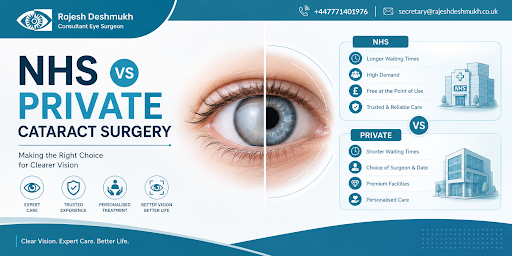
Cataract surgery is one of the most successful and commonly performed procedures in the UK, helping millions of people regain clearer vision and improve their quality of life. If you’ve been diagnosed with cataracts, one of the first decisions you’ll face is whether to have treatment through the National Health Service (NHS) or choose private cataract surgery.
Both options provide safe and effective treatment, but they differ in areas such as waiting times, surgeon choice, lens options, consultation experience, and flexibility. Understanding these differences can help you make an informed decision based on your vision needs, lifestyle, and personal preferences.
This guide compares NHS and private cataract surgery in London, explaining the advantages and considerations of each approach.
What Is Cataract Surgery?
A cataract develops when the eye’s natural lens becomes cloudy, making vision blurry, dull, or hazy. Cataract surgery removes the cloudy lens and replaces it with a clear intraocular lens (IOL) that permanently restores light transmission through the eye.
Modern cataract surgery is typically performed as a day-case procedure under local anaesthetic and usually takes around 15 to 30 minutes per eye.
NHS Cataract Surgery
The NHS provides cataract surgery for patients whose vision has been significantly affected by cataracts and who meet the eligibility criteria established by local healthcare services.
Advantages of NHS Cataract Surgery
No Direct Surgical Cost
Eligible patients receive cataract surgery without paying the full procedure cost.
High Safety Standards
NHS cataract surgery follows strict national clinical guidelines and is performed by experienced ophthalmic surgeons.
Excellent Clinical Outcomes
The NHS achieves excellent success rates, with the majority of patients experiencing significant improvements in vision after surgery.
Considerations of NHS Cataract Surgery
Although NHS care is highly regarded, patients should be aware of several practical considerations.
Waiting Times
Waiting times vary across London and the UK depending on demand and local resources. Some patients may wait several months from referral to surgery.
Limited Lens Choices
Most NHS patients receive a standard monofocal intraocular lens, which provides excellent vision at one distance—usually distance vision. Reading glasses are often still required after surgery.
Premium lens options such as:
- Multifocal lenses
- Trifocal lenses
- Extended Depth of Focus (EDOF) lenses
- Toric lenses for astigmatism
are generally not routinely offered through standard NHS cataract surgery unless clinically indicated.
Less Flexibility
Appointment scheduling and surgeon selection are usually determined by NHS availability rather than patient preference.
Private Cataract Surgery
Private cataract surgery offers greater flexibility and personalised care. Many patients choose private treatment because they wish to reduce waiting times or access advanced lens technologies.
Benefits of Private Cataract Surgery
Faster Access to Treatment
One of the biggest advantages is significantly shorter waiting times. Many patients can receive consultation, diagnostic testing, and surgery within a few weeks.
Early treatment often means:
- Better visual quality sooner
- Reduced disruption to daily life
- Less time living with worsening cataracts
Greater Choice of Surgeon
Private care often allows patients to choose an experienced consultant ophthalmologist and maintain continuity throughout diagnosis, surgery, and follow-up appointments.
Many patients value seeing the same specialist throughout their treatment journey.
Access to Premium Lens Implants
Private cataract surgery provides access to advanced intraocular lenses that may reduce dependence on glasses.
These include:
Monofocal IOL
Provides excellent vision at one distance.
Best suited for:
- Patients comfortable wearing reading glasses
- Those prioritising crisp distance vision
Multifocal IOL
Designed to improve vision at both near and far distances.
Potential benefits include:
- Reduced reliance on glasses
- Improved convenience for daily activities
Some patients may experience halos or glare around lights, particularly at night.
Trifocal IOL
Trifocal lenses provide vision at:
- Distance
- Intermediate (computer)
- Near (reading)
They are popular among patients seeking greater spectacle independence.
Extended Depth of Focus (EDOF) IOL
EDOF lenses create a continuous range of focus between distance and intermediate vision while reducing visual disturbances compared with traditional multifocal lenses.
Many patients still require reading glasses for very small print.
Toric IOL
Patients with corneal astigmatism may benefit from toric lenses, which correct astigmatism during cataract surgery and improve overall visual clarity.
Personalised Consultation
Private clinics often provide longer consultation appointments, allowing patients to discuss:
- Lifestyle requirements
- Driving habits
- Reading needs
- Computer use
- Hobbies
- Premium lens options
- Expected outcomes
This personalised approach helps match the most appropriate lens to each patient’s visual goals.
Advanced Diagnostic Technology
Many private eye clinics use sophisticated diagnostic equipment, including:
- Optical Coherence Tomography (OCT)
- Corneal topography
- Digital biometry
- Wavefront measurements
These investigations improve lens calculations and surgical planning.
NHS vs Private Cataract Surgery: Comparison
| Feature | NHS Cataract Surgery | Private Cataract Surgery |
|---|---|---|
| Cost | Covered for eligible patients | Self-funded or insured |
| Waiting Time | May be several weeks or months | Often significantly shorter |
| Choice of Surgeon | Usually limited | Usually patient choice |
| Premium Lens Options | Generally not routine | Widely available |
| Appointment Flexibility | Limited | Greater flexibility |
| Consultation Time | Standard | Often more personalised |
| Advanced Diagnostic Testing | Available where clinically required | Frequently comprehensive |
Which Option Is Right for You?
The right choice depends on your personal circumstances.
NHS May Be Suitable If You:
- Are happy with standard monofocal lenses
- Are comfortable waiting for surgery
- Meet NHS eligibility criteria
- Prefer treatment through the public healthcare system
Private Surgery May Be Worth Considering If You:
- Want faster treatment
- Prefer choosing your surgeon
- Are interested in premium intraocular lenses
- Wish to reduce dependence on glasses
- Value personalised care and flexible appointments
Questions to Ask During Your Consultation
Before making a decision, consider asking:
- Which lens is best for my lifestyle?
- Am I suitable for premium lens implants?
- Do I have astigmatism?
- What visual results can I realistically expect?
- How long will recovery take?
- What follow-up care will I receive?
- Are there any risks specific to my eyes?
These discussions help ensure your treatment plan aligns with your expectations and eye health.
Recovery After Cataract Surgery
Recovery is similar whether surgery is performed through the NHS or privately.
Most patients experience:
- Improved vision within a few days
- Mild discomfort for 24–48 hours
- Return to normal daily activities within a week
- Full healing over four to six weeks
Following your surgeon’s postoperative instructions and using prescribed eye drops are essential for a smooth recovery.
Final Thoughts
Both NHS and private cataract surgery in London provide safe and highly effective treatment for cataracts. The NHS offers excellent clinical care without direct surgical costs for eligible patients, while private treatment provides faster access, greater flexibility, and a wider range of premium lens options.
Rather than asking which option is universally “better,” the more important question is which option best matches your visual goals, lifestyle, and personal priorities. A comprehensive consultation with an experienced ophthalmologist can help you understand your choices and select the approach that offers the best long-term outcome for your vision.
Frequently Asked Questions
Is private cataract surgery safer than NHS surgery?
Both NHS and private cataract surgery follow high clinical standards and have excellent safety records. The main differences are typically waiting times, surgeon choice, consultation experience, and access to premium intraocular lenses.
Can I choose a premium lens through the NHS?
Standard NHS cataract surgery usually includes a monofocal intraocular lens. Premium lenses, such as multifocal, trifocal, or EDOF lenses, are generally available through private treatment, although exceptions may exist for specific clinical indications.
How long is the waiting time for cataract surgery in London?
Waiting times vary depending on the NHS trust or private clinic. NHS patients may wait several weeks or months, while private patients can often be seen and treated much sooner.
Will I still need glasses after cataract surgery?
This depends on the type of intraocular lens chosen. Monofocal lenses often require reading glasses after surgery, while premium lenses may reduce dependence on glasses for many daily activities.

