 Trustpilot



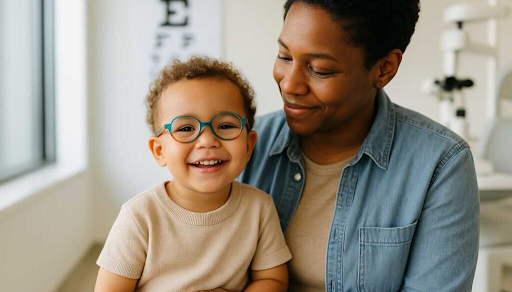
Good vision plays a crucial role in a child’s development, learning, and overall well-being. From recognizing faces and exploring their surroundings to reading and succeeding in school, children rely heavily on healthy eyesight. However, many childhood vision problems develop without obvious symptoms, making regular eye examinations essential.
One of the most common questions parents ask is: “When should my child have their first eye test?” The answer may be earlier than many people think.
This guide explains the importance of children’s eye health, recommended eye exam schedules, signs of vision problems, and how early detection can support lifelong eye health.
Why Children's Eye Health Matters
Vision is closely linked to a child’s physical, cognitive, and social development. In fact, experts estimate that a significant portion of learning during the early years occurs through visual experiences.
Undiagnosed vision problems can affect:
- Reading and writing skills
- Academic performance
- Hand-eye coordination
- Sports participation
- Confidence and social development
- Overall quality of life
Early eye examinations help identify issues before they impact a child’s development.
When Should Children Have Their First Eye Test?
Newborn Eye Screening
A baby’s eyes are usually checked shortly after birth as part of routine newborn health assessments. These early checks help identify serious congenital eye conditions.
Between 6 and 12 Months
Eye health experts recommend a comprehensive eye examination during the first year of life, especially if:
- There is a family history of eye disease
- The child was born prematurely
- Parents notice unusual eye movements
- Developmental concerns exist
During this examination, an eye care professional can assess visual development and eye alignment.
Around Age 3
A comprehensive eye test is recommended before children start school.
At this age, eye specialists can evaluate:
- Visual acuity
- Eye coordination
- Depth perception
- Eye movement
- Refractive errors
Detecting vision problems before school begins can significantly improve learning outcomes.
Before Starting School
Many experts recommend a detailed eye examination between ages 4 and 5.
This exam helps identify:
- Nearsightedness (myopia)
- Farsightedness (hyperopia)
- Astigmatism
- Lazy eye (amblyopia)
- Crossed eyes (strabismus)
Early treatment is often more effective because the visual system is still developing
How Often Should Children Have Eye Exams?
General guidelines include:
Age Group Recommended Eye Exam Schedule
| Birth to 1 year | Initial screening |
| 1 to 3 years | At least one comprehensive exam |
| 3 to 5 years | Comprehensive exam before school |
| School-age children | Every 1–2 years |
| Children with vision problems | As recommended by an eye specialist |
Children who wear glasses or have existing eye conditions may require more frequent monitoring.
Common Vision Problems in Children
Refractive Errors
These occur when the eye cannot focus light properly.
Common types include:
- Myopia (nearsightedness)
- Hyperopia (farsightedness)
- Astigmatism
Children may not realize their vision is abnormal because they assume everyone sees the same way.
Amblyopia (Lazy Eye)
Amblyopia develops when one eye does not develop normal vision during childhood.
Symptoms may include:
- Poor vision in one eye
- Squinting
- Difficulty judging depth
Early treatment often produces excellent results.
Strabismus (Crossed Eyes)
Strabismus occurs when the eyes do not align properly.
One eye may:
- Turn inward
- Turn outward
- Turn upward
- Turn downward
Early diagnosis helps prevent permanent vision problems.
Color Vision Deficiency
Some children have difficulty distinguishing certain colors.
Although not always serious, early identification can help with educational planning and learning support.
Signs Your Child May Need an Eye Test
Children often do not complain about vision problems because they may not realize anything is wrong.
Parents should watch for signs such as:
Physical Symptoms
- Frequent eye rubbing
- Excessive blinking
- Watery eyes
- Light sensitivity
- Frequent headaches
Behavioral Signs
- Sitting very close to screens
- Holding books close to the face
- Squinting frequently
- Difficulty concentrating
- Poor school performance
Eye Appearance Concerns
- Crossed eyes
- One eye turning inward or outward
- Drooping eyelids
- Persistent redness
Any of these signs warrant an eye examination.
What Happens During a Children's Eye Exam?
A pediatric eye examination is designed to be comfortable and age-appropriate.
The eye doctor may assess:
Visual Acuity
Measures how clearly the child sees.
Eye Alignment
Checks whether both eyes work together properly.
Eye Movement
Evaluates tracking and focusing ability.
Refraction Testing
Determines whether glasses are needed.
Eye Health Examination
Examines the retina, optic nerve, and other internal structures.
Many tests use pictures, symbols, or games rather than letters for younger children.
Can Vision Problems Affect Learning?
Yes. Vision problems can significantly impact educational performance.
Children with undiagnosed vision issues may experience:
- Difficulty reading
- Reduced concentration
- Poor handwriting
- Avoidance of close work
- Learning delays
Regular eye exams help ensure children can perform their best both inside and outside the classroom.
Tips for Protecting Children's Eye Health
Parents can support healthy vision by encouraging:
Outdoor Activities
Research suggests spending time outdoors may help reduce the risk of childhood myopia progression.
Healthy Nutrition
Foods rich in:
- Vitamin A
- Vitamin C
- Omega-3 fatty acids
- Lutein and zeaxanthin
support eye development.
Screen Time Management
Follow age-appropriate screen guidelines and encourage regular breaks.
Eye Safety
Protective eyewear should be used during sports and activities that pose a risk of eye injury.
When Should Parents Seek Immediate Eye Care?
Contact an eye specialist immediately if your child experiences:
- Sudden vision loss
- Eye injury
- Severe eye pain
- Sudden eye turning
- White pupil appearance in photographs
- Persistent double vision
Prompt evaluation can prevent serious complications.
Conclusion
Children’s vision is essential for learning, development, and everyday life. Because many eye conditions develop without obvious symptoms, regular eye examinations are one of the most important steps parents can take to protect their child’s eyesight.
Scheduling eye tests at the recommended ages allows early detection and treatment of vision problems, giving children the best opportunity to thrive academically, socially, and physically.
Healthy vision begins with early eye care—and the right time to start is sooner than many parents realize.

