 Trustpilot



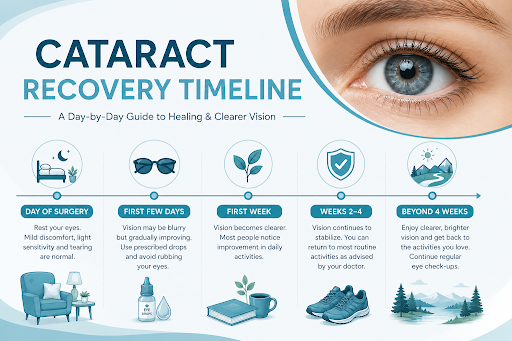
Cataract surgery is one of the safest and most successful surgical procedures performed today, with millions of patients experiencing clearer vision every year. Although the operation itself usually takes less than 30 minutes, recovery is a gradual process. Knowing what to expect during each stage of healing can help you feel more confident and ensure the best possible outcome.
Most people notice an improvement in vision within a few days, but complete healing may take 4 to 6 weeks. Following your surgeon’s instructions, using prescribed eye drops, and attending follow-up appointments are essential for a smooth recovery.
This guide walks you through the cataract recovery timeline—from the day of surgery to full recovery—and explains what is normal, what to avoid, and when to seek medical advice.
What Happens Immediately After Cataract Surgery?
During cataract surgery, the cloudy natural lens is removed and replaced with a clear intraocular lens (IOL). The procedure is typically performed under local anaesthetic, allowing patients to return home on the same day.
Immediately after surgery, your eye may be covered with a protective shield, and your vision may appear blurry while the eye begins to heal.
Cataract Recovery Timeline
Day of Surgery
The first few hours after surgery focus on protecting the eye and allowing the anaesthetic to wear off.
What You May Experience
- Mild blurred vision
- Slight redness
- Watery eyes
- Mild discomfort or a gritty sensation
- Increased sensitivity to light
These symptoms are generally temporary and improve over the following days.
What You Should Do
- Rest at home.
- Wear the protective eye shield as instructed.
- Begin your prescribed eye drops.
- Avoid rubbing or touching your eye.
- Arrange for someone else to drive you home.
What to Avoid
- Driving
- Heavy lifting
- Bending over repeatedly
- Strenuous exercise
- Eye makeup
Days 1–3: Early Healing Begins
Most patients notice that their vision starts improving within the first few days.
Common Changes
- Vision gradually becomes clearer.
- Colours may appear brighter.
- Light sensitivity begins to improve.
- Mild itching or irritation is normal.
Follow-Up Appointment
Your surgeon will usually examine your eye within 24 to 48 hours to ensure healing is progressing normally.
Continue Using
- Antibiotic eye drops
- Anti-inflammatory eye drops
- Lubricating artificial tears if recommended
Do not stop your medications unless advised by your ophthalmologist.
Week 1: Vision Continues to Improve
During the first week, many patients feel comfortable returning to light daily activities.
You May Notice
- Improved distance vision
- Reduced redness
- Less irritation
- Better overall visual clarity
Some people may still experience:
- Halos around lights
- Mild glare at night
- Temporary fluctuations in vision
These symptoms often improve as the eye heals.
Activities You Can Usually Resume
- Reading
- Watching television
- Walking
- Light household tasks
- Computer use
Always follow your surgeon’s specific advice before resuming activities.
Week 2: Greater Comfort and Stability
By the second week, most patients experience significant improvement.
Healing Milestones
- Vision becomes more stable.
- Most discomfort disappears.
- The eye feels more comfortable.
- Inflammation continues to decrease.
Continue to Avoid
- Swimming
- Hot tubs
- Dusty environments
- Contact sports
Your eye remains vulnerable to infection during this stage.
Weeks 3–4: Returning to Normal Activities
Most daily routines can usually be resumed.
Patients often report:
- Clearer vision
- Improved contrast
- Better colour perception
- Increased confidence with everyday tasks
If both eyes require cataract surgery, your ophthalmologist may schedule the second procedure around this time, depending on your individual treatment plan.
Weeks 4–6: Full Recovery
Most patients achieve complete healing within four to six weeks.
During your final follow-up appointment, your ophthalmologist will assess:
- Visual acuity
- Eye pressure
- Lens position
- Overall healing
If needed, a new prescription for glasses may be provided once your vision has stabilised.
What Is Normal During Recovery?
The following symptoms are usually temporary:
- Mild blurred vision
- Light sensitivity
- Watery eyes
- Mild redness
- Slight itching
- Glare or halos around lights
These symptoms generally improve as healing progresses.
Warning Signs That Require Immediate Medical Attention.
Although complications are uncommon, contact your eye doctor immediately if you experience:
- Sudden loss of vision
- Severe or worsening eye pain
- Increasing redness
- Thick yellow or green discharge
- Flashes of light
- A sudden increase in floaters
- A shadow or curtain over your vision
- Persistent nausea with severe eye pain
Prompt treatment is essential to protect your vision.
Recovery Tips for Faster Healing
Following these recommendations can support a smooth recovery.
Use Eye Drops Correctly
Take all prescribed medications exactly as directed.
Protect Your Eye
Wear your protective shield while sleeping during the first few nights and use sunglasses outdoors to reduce light sensitivity.
Avoid Rubbing Your Eye
Even if the eye feels itchy, avoid rubbing it, as this may interfere with healing.
Maintain Good Hygiene
Wash your hands before applying eye drops and avoid exposing the eye to dust, smoke, or dirty water.
Stay Hydrated and Eat Well
A balanced diet rich in fruits, vegetables, lean protein, and omega-3 fatty acids supports tissue healing.
When Can You Return to Everyday Activities?
| Activity | Typical Recovery Time* |
|---|---|
| Reading | Within 1–2 days |
| Watching television | Same day or next day |
| Computer use | 1–2 days |
| Walking | Same day |
| Driving | Usually after your doctor confirms vision is safe |
| Light exercise | About 1 week |
| Swimming | 3–4 weeks |
| Heavy lifting | 2–4 weeks |
| Eye makeup | About 2 weeks |
Recovery times vary depending on individual healing and your ophthalmologist’s advice.
Frequently Asked Questions
How long does blurred vision last after cataract surgery?
Many patients notice improved vision within 24–72 hours. However, it may take several weeks for vision to stabilize completely.
Is it normal to see halos after surgery?
Yes. Temporary halos, glare, or light sensitivity are common during early healing and usually improve over time.
Can I sleep on my side after cataract surgery?
Your surgeon may recommend avoiding sleeping on the operated side for the first few days. Always follow your postoperative instructions.
When can I get new glasses?
Your vision typically stabilizes within 4–6 weeks, after which your ophthalmologist can determine whether you need a new glasses prescription.
Tips for the Best Recovery
To achieve the best outcome:
- Attend every follow-up appointment.
- Use all prescribed eye drops.
- Avoid strenuous activities until cleared by your surgeon.
- Wear sunglasses outdoors.
- Keep water, soap, and shampoo out of the operated eye during the early healing period.
- Contact your eye doctor immediately if you notice unusual symptoms.
Conclusion
Recovering from cataract surgery is generally straightforward, and most patients enjoy significant improvements in vision within the first few weeks. While mild discomfort, blurred vision, and light sensitivity are common early on, these symptoms usually improve steadily with proper care.
By following your ophthalmologist’s instructions, protecting your eye, and attending follow-up appointments, you can support a smooth recovery and enjoy the long-term benefits of clearer vision. If you experience severe pain, sudden vision changes, or increasing redness, seek prompt medical attention to ensure the best possible outcome.

