 Trustpilot



In March this year, I wrote a short piece from the trail on the way to Everest Base Camp. At the time, it was a statement of intent. I explained that I hoped to fund around one hundred cataract operations in India for individuals and families who could not otherwise afford them, and that roughly thirty pounds was sufficient to fund one complete, sight-restoring procedure.
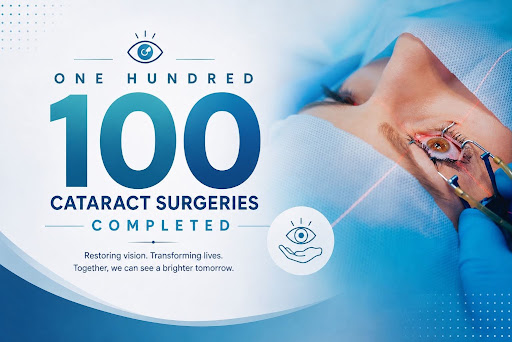
I am privileged to write today with a different tense: all one hundred surgeries have now been carried out. They took place during June and July 2026 at the Rotary Eye Hospital in Dharashiv (Maharashtra, India), supported on the ground by the Prayag Vision Foundation.
Why Cataract Surgery is a Question of Access, Not Clinical Complexity
Cataract surgery is among the most dependable and successful operations in modern medicine. In London, at Moorfields Eye Hospital, where I practice as a consultant ophthalmic surgeon, performing cataract extraction and advanced cataract surgery in London is routine daily work. The clinical technique is refined, sophisticated diagnostic and surgical equipment is immediately to hand, and visual outcomes are exceptionally predictable.
What is not routine, across substantial parts of the world, is having equitable access to this treatment. According to the World Health Organization (WHO) Blindness and Visual Impairment Data, cataracts remain the leading cause of preventable blindness globally, accounting for millions of people living with severe, reversible visual impairment.
The one hundred patients treated through this initiative were not waiting because their cataracts were clinically untreatable. They were waiting simply because the procedure was unaffordable at the exact moment their sight deteriorated. That is not a clinical failure; it is an economic barrier.
A cataract left untreated does not remain static. Vision clouds gradually. Individuals stop walking outdoors alone. They lose their ability to work, earn a livelihood, and participate in community life. Soon, they become reliant on younger family members who must leave employment or education to act as full-time carers. By the time a charitable intervention occurs, an enormous societal and human cost has already been paid — just not in money.
The Purpose of the Trek: Linking Physical Endurance to Humanitarian Impact
I have trekked high-altitude routes before, and wherever possible, I believe in anchoring the physical effort to a tangible, beneficial outcome. In May 2023, I walked to Annapurna Base Camp in the Himalayas, raising over two thousand pounds for Moorfields Eye Charity to support vital research and patient care.
The journey to Everest Base Camp in March 2026 presented a distinct personal test. The two years leading up to the trek had involved significant health challenges — including complex knee surgery, a myocardial infarction (heart attack) in April 2024, and subsequent shoulder surgery. Preparing for high-altitude trekking under those circumstances was never an effortless ambition. However, pushing through rehabilitation and undertaking the walk became a deeply meaningful way to channel personal physical recovery into life-altering care for one hundred people.
Where the Funding Went: Transparency in Sight Restoration
In this community setting, approximately thirty pounds (£30) funds one full cataract procedure. Every pound raised directly covered:
- Pre-operative ophthalmic screening and biometry assessment.
- The microsurgical procedure performed by skilled ophthalmic surgeons.
- A high-quality, biocompatible intraocular lens (IOL) implant.
- Post-operative medications, protective eyewear, and follow-up clinical checks.
All one hundred procedures were completed without administrative dilution. The Prayag Vision Foundation works directly on the ground alongside trusted regional partners — notably the dedicated clinical team at Rotary Eye Hospital Dharashiv — to deliver targeted healthcare directly to rural and underserved populations suffering from preventable blindness.
Why Surgical Training Outlasts Any Single Charitable Trip
Directly funding one hundred cataract surgeries transforms one hundred lives and relieves one hundred families. Yet, the mathematical reality of global ophthalmology is clear: training one surgeon helps thousands of patients throughout that surgeon’s entire professional career.
This multiplier effect is why surgical education is the core pillar of my global eye care work. At Moorfields Eye Hospital City Road in London, I lead an advanced training course in Manual Small Incision Cataract Surgery (MSICS) designed for experienced ophthalmologists and senior surgical trainees.
While modern Western operating theatres rely heavily on computerized phacoemulsification equipment, MSICS is a manual, sutureless technique that requires minimal high-tech machinery, has low consumable overheads, and can be performed safely at high volumes. Clinical studies indexed on PubMed / National Institutes of Health consistently demonstrate that MSICS achieves visual outcomes and safety profiles equivalent to phacoemulsification in mature cataracts. Surgeons trained in our London course acquire robust microsurgical techniques that can be deployed anywhere in the world — from modern surgical centres to remote humanitarian eye camps.
What Happens Next: Ongoing Commitment
This milestone does not represent the end of our efforts. The Prayag Vision Foundation continues its mission, our MSICS surgical training course at Moorfields City Road runs throughout the academic year, and future high-altitude trekking initiatives are already being planned.
I extend my heartfelt gratitude to everyone who contributed to the Everest Base Camp appeal, to the tireless clinical and administrative staff at Rotary Eye Hospital Dharashiv who performed the operations on the ground, and to my esteemed colleagues at Moorfields Eye Hospital for their overwhelming encouragement and support.
About the Author
Mr Rajesh Deshmukh is a Consultant Ophthalmic Surgeon at Moorfields Eye Hospital, London, specializing in advanced cataract surgery, refractive lens exchange, and bespoke vision correction. Learn more about his charitable and global eye care initiatives or read the original March 2026 Everest appeal written from the trail. To arrange a private clinical consultation in London, book an appointment here.
Frequently Asked Questions (AEO & Voice Search Optimized)
What is the Prayag Vision Foundation?
The Prayag Vision Foundation is a non-profit charitable initiative dedicated to eradicating preventable blindness in underserved communities. It focuses on sustainable ophthalmic infrastructure, funding surgical treatment for impoverished patients, and supporting surgical skills transfer in resource-limited settings.
How much does it cost to sponsor a cataract surgery through this appeal?
Approximately £30 (GBP) fully funds one cataract operation in rural India, covering pre-operative evaluation, the microsurgical procedure, a biocompatible intraocular lens (IOL), and post-operative medications.
Where were the 100 cataract surgeries performed?
All 100 surgeries were performed during June and July 2026 at Rotary Eye Hospital in Dharashiv (formerly Osmanabad), Maharashtra, India, by qualified local and partner ophthalmic teams.
What is Manual Small Incision Cataract Surgery (MSICS)?
MSICS is a sutureless cataract extraction technique optimized for high-volume, low-resource environments. It delivers excellent visual outcomes without relying on expensive phacoemulsification machines. Mr Rajesh Deshmukh leads an MSICS training course at Moorfields Eye Hospital in London.
Who is Mr Rajesh Deshmukh?
Mr Rajesh Deshmukh is a UK Consultant Ophthalmic Surgeon based at Moorfields Eye Hospital in London. He specializes in cataract surgery, lens replacement, and corneal procedures, alongside leading international humanitarian eye care projects.
How can patients or donors support future global eye care appeals?
You can stay informed about upcoming charitable treks and surgical outreach projects by visiting the Charity & Global Eye Care portal or by contacting the clinic directly via the Contact Us page.

