 Trustpilot



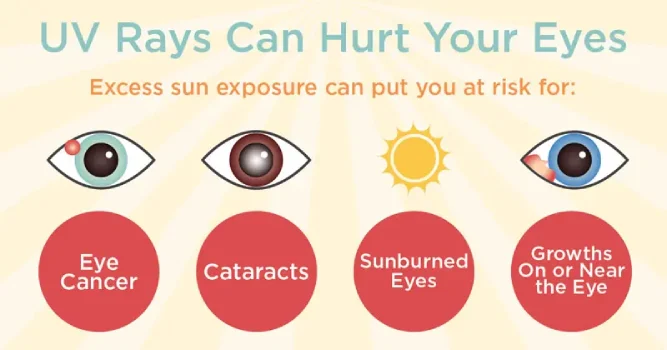
Sunlight is essential for life, but prolonged exposure to ultraviolet (UV) radiation can harm your eyes just as it damages your skin. Many people remember to protect their skin from the sun but forget that their eyes are also vulnerable to UV damage.
Understanding how UV light affects eye health and learning how to protect your eyes can help prevent long-term vision problems.
What Is UV Light?
Ultraviolet (UV) light is an invisible type of radiation emitted by the sun. Although we cannot see it, UV radiation can still damage tissues in the body, including the eyes.
There are three types of UV radiation:
- UVA rays: penetrate deeply and contribute to long-term eye damage
- UVB rays: stronger rays that can damage the eye surface
- UVC rays: mostly absorbed by the Earth’s atmosphere
Repeated exposure to UVA and UVB radiation can gradually damage sensitive eye structures.
Recommended Eye Exam Frequency by Age
UV rays can harm several parts of the eye, including the cornea, lens, and retina. Damage can occur both in the short term and over many years.
Short-Term UV Damage
Brief but intense sun exposure can cause a condition known as photokeratitis, often described as a sunburn of the eye.
Symptoms may include:
- Eye pain
- Redness
- Blurred vision
- Sensitivity to light
- Excessive tearing
Photokeratitis is usually temporary but can be extremely uncomfortable.
Long-Term UV Damage
Repeated exposure to sunlight over time increases the risk of serious eye conditions.
Cataracts
UV radiation is a major risk factor for cataracts, a condition in which the natural lens of the eye becomes cloudy and affects vision.
Macular Degeneration
Chronic sun exposure may contribute to age-related macular degeneration (AMD), which damages the central vision needed for reading and driving.
Pterygium
UV exposure can cause pterygium, a growth of tissue on the white part of the eye that may extend onto the cornea.
Eyelid Skin Cancer
The skin around the eyes is extremely delicate and can develop cancers due to prolonged UV exposure.
Who Is Most at Risk?
Certain individuals are more vulnerable to UV-related eye damage.
Higher risk groups include:
- People who spend long hours outdoors
- Individuals living in sunny or high-altitude environments
- Children and teenagers
- People who have had cataract surgery
- Individuals with light-colored eyes
Children are particularly sensitive because their eye lenses allow more UV radiation to reach the retina.
How to Protect Your Eyes from UV Damage
Fortunately, protecting your eyes from harmful UV rays is simple and effective.
Wear UV-Protective Sunglasses
Choose sunglasses that block 100% of UVA and UVB rays. Wraparound styles provide better protection by limiting side exposure.
Wear a Wide-Brimmed Hat
Hats can reduce UV exposure to the eyes by nearly 50 percent.
Avoid Peak Sun Hours
UV radiation is strongest between 10 a.m. and 4 p.m. Limiting sun exposure during these hours can reduce risk.
Protect Children’s Eyes
Children should wear UV-protective sunglasses when outdoors, especially at the beach, park, or during sports.
Use UV Protection Year-Round
UV radiation is present even on cloudy days and can reflect from surfaces such as snow, water, and sand.
When Should You See an Eye Doctor?
Consult an eye specialist if you experience:
- Persistent eye irritation after sun exposure
- Blurred vision
- Sensitivity to light
- Visible growths on the eye surface
- Changes in vision
Regular eye exams also help detect early signs of UV-related eye damage.
The Role of Regular Eye Exams
Routine eye exams allow eye specialists to identify early changes caused by UV exposure.
These examinations may detect:
- Early cataracts
- Retinal changes
- Corneal damage
- Abnormal growths on the eye surface
Early detection improves treatment outcomes and helps preserve long-term vision.
Older Adults (Age 65 and Above)
Conclusion
While sunlight is a natural part of everyday life, prolonged exposure to UV radiation can harm your eyes and increase the risk of several vision-threatening conditions. Wearing UV-protective sunglasses, limiting sun exposure, and scheduling regular eye exams are simple yet powerful ways to safeguard your vision.
Protecting your eyes from the sun today can help maintain healthy vision for the future.

